Paver Patios & Driveways
Pavers, base stone, bedding sand and edge restraint for a patio or drive — with the excavation depth that decides whether this is a weekend or a dumpster rental.
Pavers do not fail because of the pavers. They fail because the base was too thin, was not compacted, or was laid on soft ground — and the only repair is lifting the entire field.
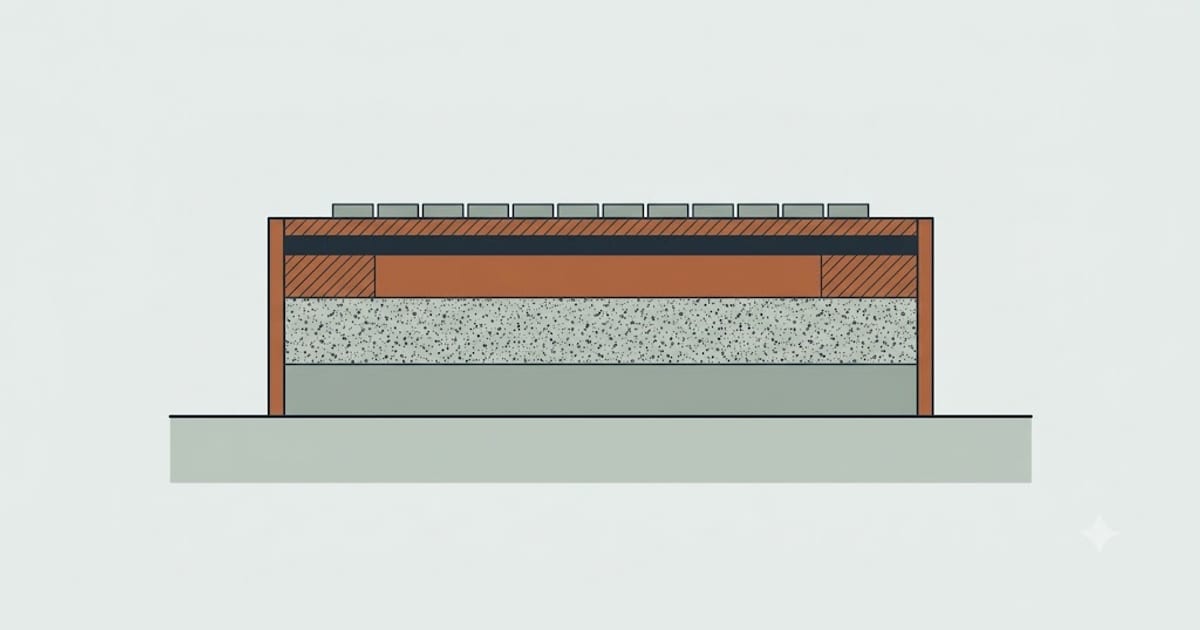
The base is the job
Four inches of compacted base under foot traffic. Six to eight under vehicles, and eight on clay or anything that has been filled. Then one inch of bedding sand, screeded flat and never compacted before laying.
Compact the base in lifts of no more than four inches. This is the single most skipped step and the single most common cause of a wavy patio.
Excavation is the line people cost last
Base plus sand plus the paver itself is typically 7 to 11 inches of soil out of the ground — and off the property. That is the measurement that decides whether this is a weekend with a shovel or a week with a skip and a mini-digger.
Pattern changes the paver count
Running bond and basketweave waste about 5%. Ninety-degree herringbone about 10%. Forty-five-degree herringbone 15%, because almost every edge paver takes two cuts and the offcuts fit nothing else.
On a driveway the extra cutting earns its keep: herringbone interlocks against braking and turning loads in a way no straight pattern does, and a running-bond drive spreads over a few seasons however good the base is.
Edge restraint is not optional
Spiked into the base around the whole perimeter. Without it the outer courses walk outward, the joints open, and jointing sand washes out from the edge inward until the field unravels.
Before anything goes down
Slope away from the house at about ¼ inch per foot. Fixing drainage after the pavers are laid means lifting them.
1 article
18 × 18 ft paver patio in 6×9″, basketweave
| Pavers2.67 per ft² plus 5% waste | 908pavers |
|---|---|
| Area18 × 18 ft | 324ft² |
| Base stone (4″ compacted)4.88 yd³ ordered — includes 22% for compaction | 6.83tons |
| Bedding sand (1″)1 yd³ | 1.35tons |
| Polymeric joint sandabout 80 ft² per bag | 550 lb bags |
| Edge restraintthe perimeter — without it the field creeps outward | 72linear ft |
| Excavation depth4″ base + 1″ sand + 2⅜″ paver | 7.4in |
| Soil to removeand it has to go somewhere | 7.4yd³ |
| Patternpairs at right angles; no diagonal cuts at all | basketweave |
Notes
- The base is the job. Pavers do not fail because of the pavers; they fail because the base was too thin, not compacted, or laid on soft ground. 4 inches compacted is the standard for foot traffic, and it wants compacting in lifts of no more than 4 inches at a time.
- Excavation is 7.4 inches, which means 7.4 cubic yards of soil out of the ground and off the property. That is the part people cost last and the part that decides whether this is a weekend or a skip hire.
- Basketweave: pairs at right angles; no diagonal cuts at all. At 5% waste this is among the cheapest patterns to lay.
- On a patio the pattern is a free choice — nothing here is load-limited. Pick for looks and for how much cutting you are willing to do.
- Edge restraint is not optional. 72 linear ft around the perimeter, spiked into the base. Without it the outer courses walk outward, the joints open, and the sand washes out from the edge inward.
- Slope away from the house at about ¼ inch per foot before you lay anything. Correcting drainage afterwards means lifting the field.
Pavers and base
91 calculations · browse all
- 6 × 6 ft paver patio in 4×8″ brick, running bond
- 6 × 8 ft paver patio in 4×8″ brick, running bond
- 6 × 12 ft paver patio in 4×8″ brick, running bond
- 6 × 16 ft paver patio in 4×8″ brick, running bond
- 6 × 20 ft paver patio in 4×8″ brick, running bond
- 6 × 24 ft paver patio in 4×8″ brick, running bond
- 6 × 28 ft paver patio in 4×8″ brick, running bond
- 8 × 8 ft paver patio in 4×8″ brick, running bond
- 8 × 12 ft paver patio in 4×8″ brick, running bond
- 8 × 16 ft paver patio in 4×8″ brick, running bond
- 8 × 18 ft paver patio in 4×8″ brick, running bond
- 8 × 22 ft paver patio in 4×8″ brick, running bond
- 8 × 26 ft paver patio in 4×8″ brick, running bond
- 8 × 30 ft paver patio in 4×8″ brick, running bond
- 10 × 12 ft paver patio in 4×8″ brick, running bond
- 10 × 16 ft paver patio in 4×8″ brick, running bond
- 10 × 20 ft paver patio in 4×8″ brick, running bond
- 10 × 24 ft paver patio in 4×8″ brick, running bond
- 10 × 28 ft paver patio in 4×8″ brick, running bond
- 12 × 12 ft paver patio in 4×8″ brick, running bond
- 12 × 14 ft paver patio in 4×8″ brick, running bond
- 12 × 18 ft paver patio in 4×8″ brick, running bond
- 12 × 22 ft paver patio in 4×8″ brick, running bond
- 12 × 26 ft paver patio in 4×8″ brick, running bond
- 12 × 30 ft paver patio in 4×8″ brick, running bond
- 14 × 16 ft paver patio in 4×8″ brick, running bond
- 14 × 20 ft paver patio in 4×8″ brick, running bond
- 14 × 24 ft paver patio in 4×8″ brick, running bond
- 14 × 28 ft paver patio in 4×8″ brick, running bond
- 14 × 30 ft paver patio in 4×8″ brick, running bond
- 16 × 18 ft paver patio in 4×8″ brick, running bond
- 16 × 22 ft paver patio in 4×8″ brick, running bond
- 16 × 26 ft paver patio in 4×8″ brick, running bond
- 16 × 30 ft paver patio in 4×8″ brick, running bond
- 18 × 20 ft paver patio in 4×8″ brick, running bond
- 18 × 24 ft paver patio in 4×8″ brick, running bond
- 18 × 28 ft paver patio in 4×8″ brick, running bond
- 20 × 20 ft paver patio in 4×8″ brick, running bond
- 20 × 24 ft paver patio in 4×8″ brick, running bond
- 20 × 26 ft paver patio in 4×8″ brick, running bond
- 20 × 30 ft paver patio in 4×8″ brick, running bond
- 22 × 24 ft paver patio in 4×8″ brick, running bond
- 22 × 28 ft paver patio in 4×8″ brick, running bond
- 24 × 24 ft paver patio in 4×8″ brick, running bond
- 24 × 28 ft paver patio in 4×8″ brick, running bond
- 26 × 26 ft paver patio in 4×8″ brick, running bond
- 26 × 30 ft paver patio in 4×8″ brick, running bond
- 28 × 30 ft paver patio in 4×8″ brick, running bond
 Paver Base Cost — What the Layer Nobody Sees Actually Costs
The base is a third of the material cost and all of the reason a patio either stays flat or does not.