Slabs & Floors
A slab is the simplest concrete calculation and the one where the ground underneath decides everything.
Volume is width × length × thickness ÷ 27 for cubic yards, plus about 10% — because the subgrade dips, the forms bow outward under wet concrete, and some of it ends up on the ground rather than in the form.
Thickness is not how you stop cracks
Four inches is standard for a residential slab carrying foot traffic and furniture. Five gives real margin for a vehicle. Six is for a driveway seeing a loaded truck.
Going thicker does not prevent cracking. Concrete cracks because it shrinks as it cures, and it will do that at any thickness. Control joints decide where it cracks — cut or tooled to a quarter of the slab depth, spaced no more than 24 to 30 times the thickness in feet. Skipping them does not prevent the crack; it just means the crack goes wherever it likes, usually diagonally across the middle.
Bags or a truck
The crossover sits very close to one cubic yard. A yard is about 45 bags of 80 lb mix — 3,600 lb of material to carry, open and mix while the first batch is already setting. The short-load fee on a small delivery looks expensive until you price that afternoon.
What no calculator can tell you
Whether the ground is any good. A slab on compacted gravel over undisturbed soil lasts decades. The same slab on soft fill settles and breaks in half, and the concrete had nothing to do with it.
Compact in lifts of no more than four inches. One pass over eight inches of loose stone compacts the top and leaves the bottom exactly as it was.
4 articles
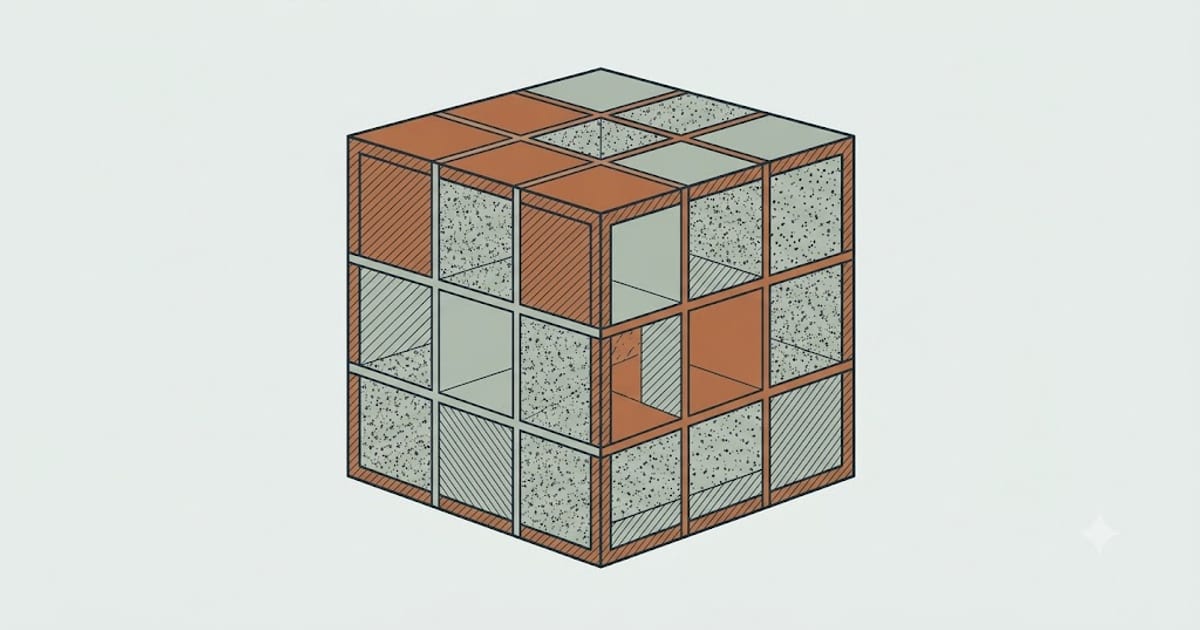 Converting a Slab to Cubic Yards, and Why Plants Only Sell in Halves
Cubic yards is the unit the truck arrives in, and it is the only unit the plant will talk to you about. Getting there from feet and inches takes one division.
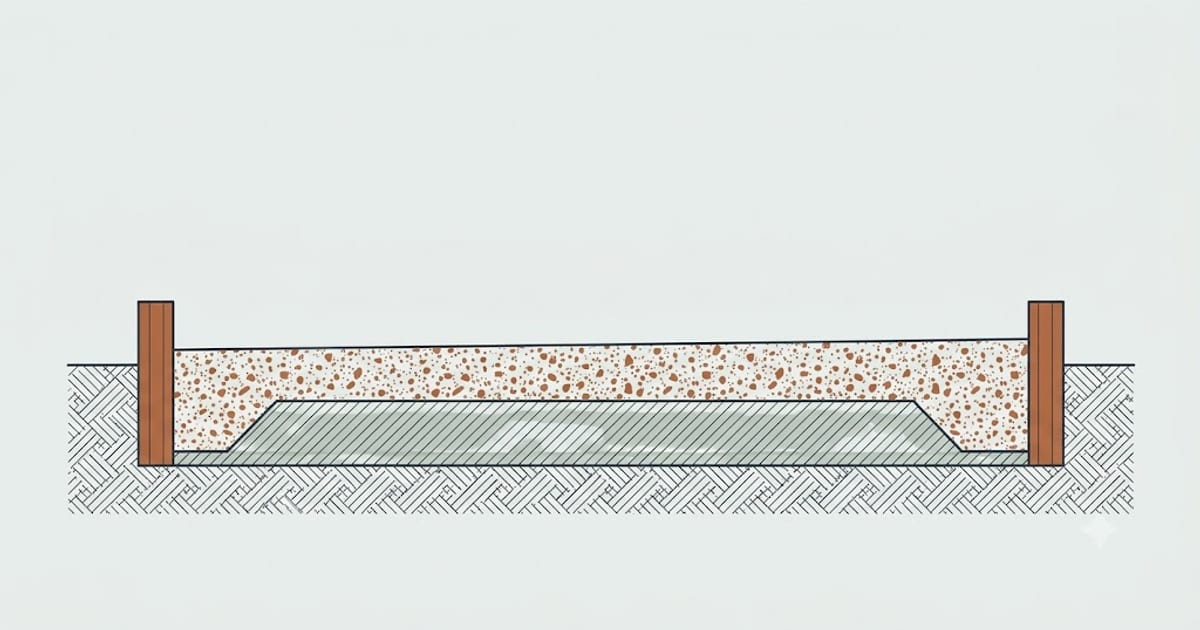 Concrete for a 10 × 10 Patio: Every Number, Start to Finish
The most searched slab size there is. Here is every number for it, including the ones that decide whether you do it in bags or make a phone call.
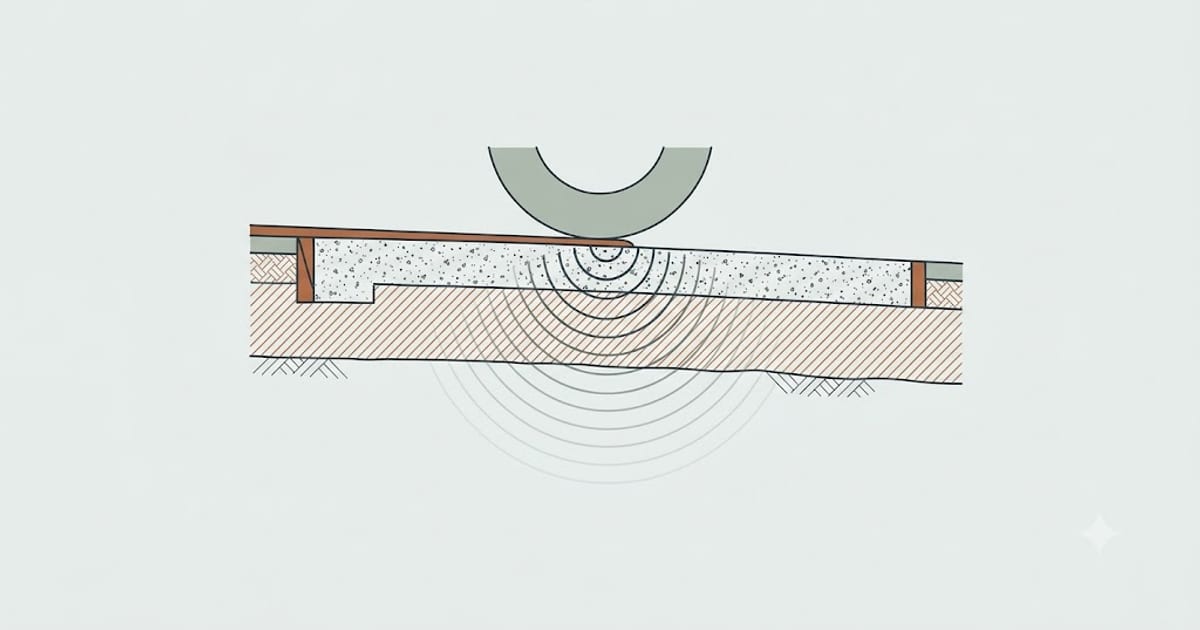 Driveway Slab Thickness: What the Extra Inch Buys You
Four inches is a patio. A driveway carries a load that concentrates on four small contact patches, and the difference an inch makes is not linear.
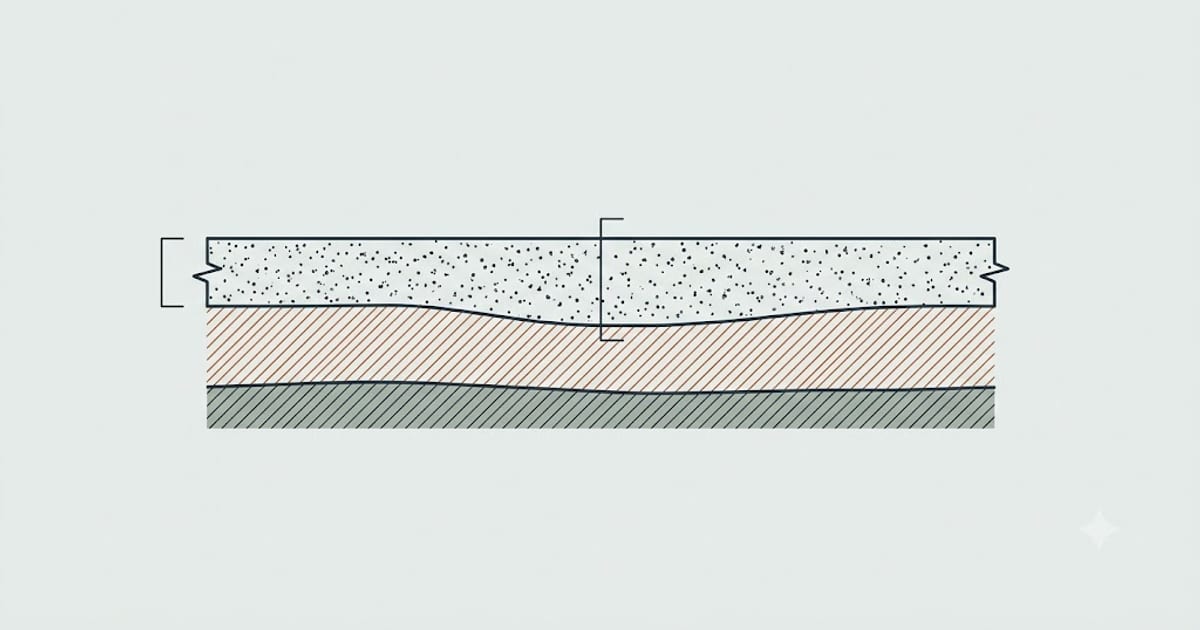 How Much Concrete for a Slab: The Table, and Why You Will Run Short
The volume arithmetic takes ten seconds and almost nobody gets it wrong. People run short anyway, and the reason is not in the formula — it is in the ground underneath.