Mix Ratios
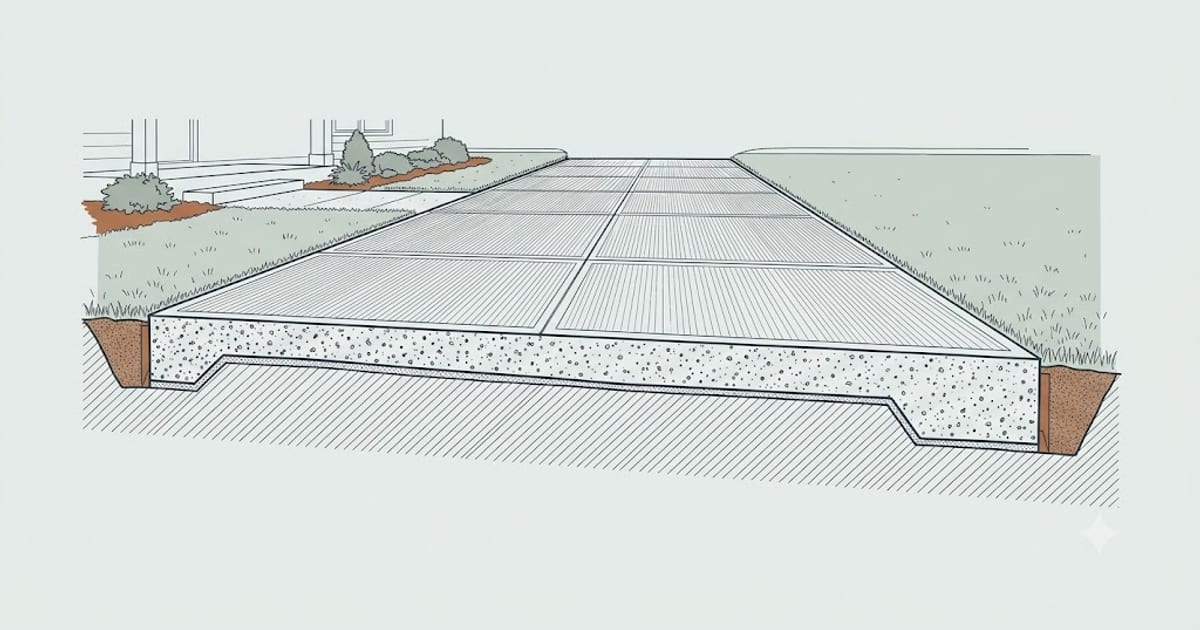
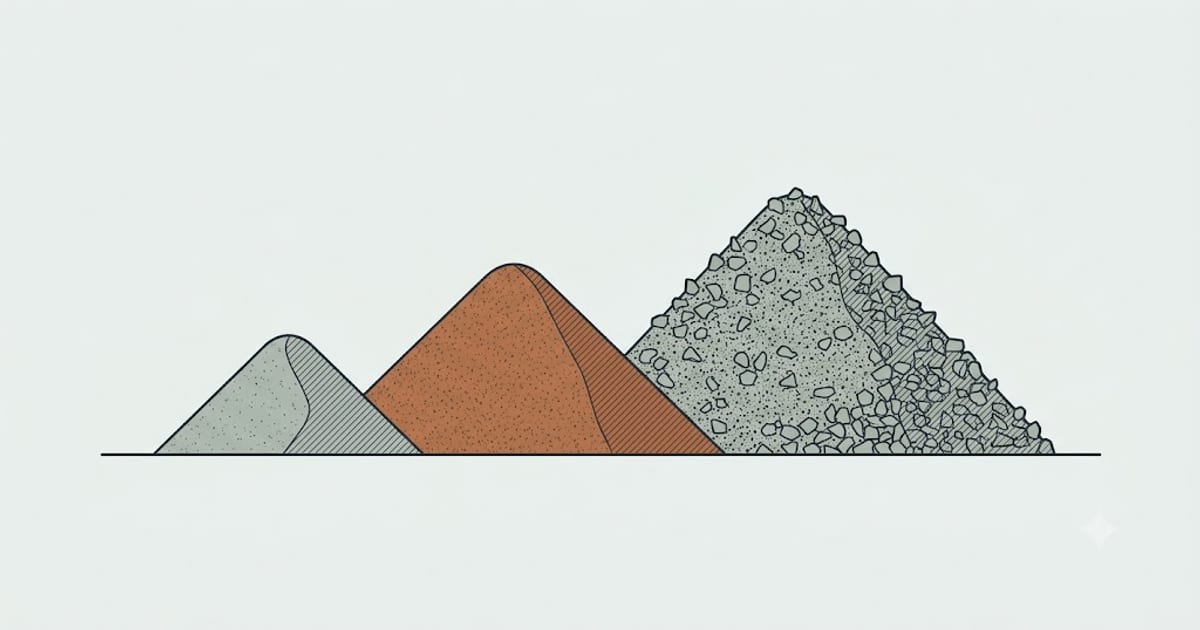
1:2:3 — one part cement, two parts sand, three parts gravel. That is the ratio everyone quotes, and mixed correctly it lands around 3,000 psi, which covers most residential slabs, footings and piers.
The part nobody quotes is the fourth number: water. Cement needs roughly 0.45 to 0.60 parts of water by weight to hydrate fully, and that ratio decides the strength far more decisively than fine adjustments to the sand and gravel.
Water is the strength dial, and it only turns down
Every extra liter of water past what the cement needs leaves a void when it evaporates. Those voids are why a wet, easy-to-pour mix ends up weak. Push the water-cement ratio from 0.45 to 0.65 and you can lose something like a third of the compressive strength — from the same bag of cement, the same sand, the same gravel.
This is the single most common way a correct ratio produces a bad slab. The mix looked stiff, somebody added water to make it workable, and the strength left with the bleed water.
If it is too stiff to place, the answer is a plasticizer or a smaller aggregate — not the hose.
Ratios by job
- 1:2:3 — slabs, footings, piers, steps. Around 3,000 psi.
- 1:2:4 — non-structural fill, mass concrete where strength is not the point. Around 2,500 psi.
- 1:1.5:3 — structural work wanting 4,000 psi and up.
- 1:3 cement to sand — mortar and render, no coarse aggregate at all.
Proportion by volume, judge by weight
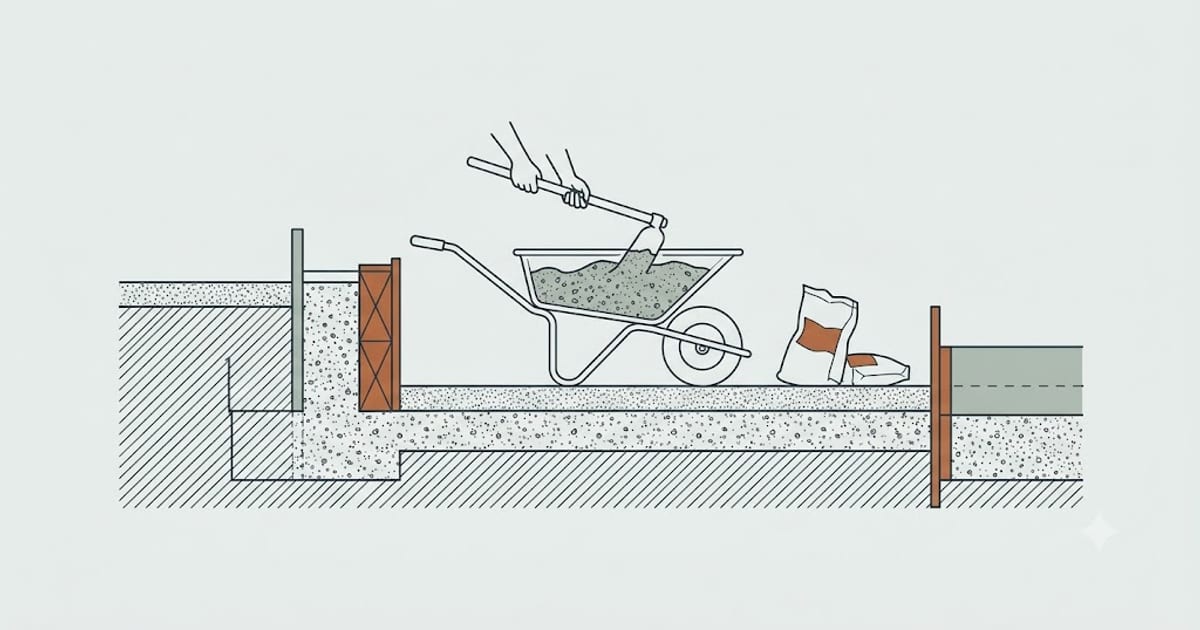
These ratios are volumetric — shovel counts, bucket counts. That is fine on site and it is how they are meant to be used.
But sand carries water, and damp sand bulks: it can occupy 20 to 30 percent more volume than the same sand dry. Measure a "part" of wet sand by the bucket and you are quietly short on sand and long on cement. On a small pour it does not matter much. On anything structural, buy ready-mix and let the batching plant weigh it.
4 articles
 What PSI Concrete Do You Need? A Table by Application, and Why Stronger Is Not Always Better
PSI is the number everyone asks for and rarely the number that decides whether a slab survives. In freeze-thaw country a different specification matters more.
 How Much Water per Bag of Concrete — and the Strength Every Extra Litre Costs
The bag prints a water figure and it is a maximum dressed up as an instruction. Every measure past what the cement needs becomes a void when it dries.
 Concrete, Cement, Mortar and Grout: One Is an Ingredient, Three Are Recipes
Cement is flour. Concrete, mortar and grout are three different things you can bake with it, and they are not interchangeable in either direction.
 The 1:2:3 Concrete Mix, and the Ratio Nobody Quotes
Everyone knows 1:2:3. Almost nobody quotes the fourth number, and it is the one that decides whether the concrete reaches its strength.