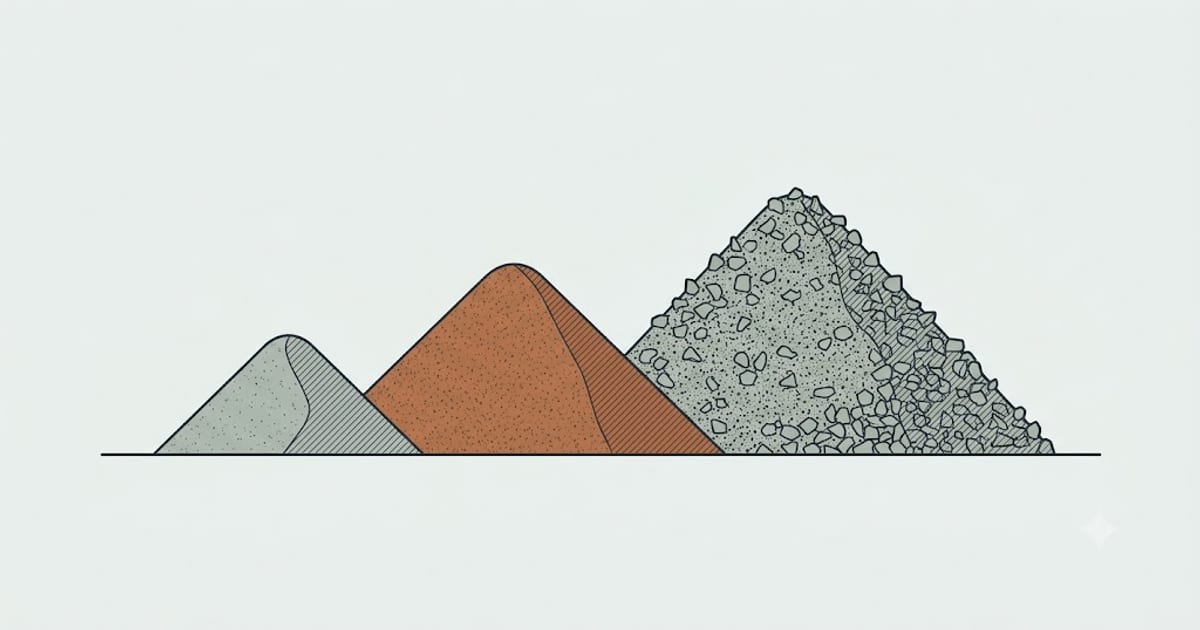
1:2:3 means one part cement, two parts sand, three parts coarse aggregate — by volume, not by weight. Mixed with the right amount of water it gives roughly 3,000 psi at 28 days, which covers most residential work.
It is the most repeated number in concrete and it is only half the specification.
The number that actually decides strength
Concrete strength is governed by the water-to-cement ratio — the weight of water divided by the weight of cement. This relationship, Abrams' law, has been understood since 1918 and it is unforgiving.
| w/c ratio | Approximate 28-day strength |
|---|---|
| 0.40 | 5,800 psi |
| 0.50 | 4,300 psi |
| 0.60 | 3,200 psi |
| 0.70 | 2,400 psi |
| 0.80 | 1,800 psi |
A perfect 1:2:3 mix with too much water is weak concrete. The aggregate ratio sets the recipe; the water ratio sets the result.
For 1:2:3 the target is about 0.50 — roughly 6 gallons of water per 94 lb bag of cement. Concrete at that ratio is stiffer than most people expect and harder to place, which is exactly why site-mixed concrete tends to be weak: water is added until it moves easily, and each extra gallon is strength thrown away.
Common ratios and what they are for
| Ratio | Approx. strength | Typical use |
|---|---|---|
| 1:3:5 | 2,000 psi | Mass fill, non-structural |
| 1:2.5:4 | 2,500 psi | Footings, foundations |
| 1:2:3 | 3,000 psi | Slabs, patios, general residential |
| 1:2:2.5 | 3,500 psi | Driveways, structural slabs |
| 1:1.5:2.5 | 4,000 psi | Suspended slabs, heavy load |
| 1:1:2 | 5,000 psi+ | Specialist, engineered |
More cement is not always better. Very rich mixes shrink more, generate more heat, and crack more — which is why a 5,000 psi mix in a patio is an expensive way to get a worse patio.
Volume batching is approximate, and the sand is why
Damp sand bulks — it can occupy up to 30% more volume than the same sand dry, because surface moisture holds the grains apart. A bucket of damp sand contains substantially less sand than a bucket of dry sand.
That error goes straight into the ratio, and it always goes the same direction: less sand than intended, so a richer, more shrinkage-prone mix than intended. Commercial plants batch by weight for this reason.
For anything structural, use bagged pre-mixed concrete or ready-mix. Volume batching is for garden walls and fill.
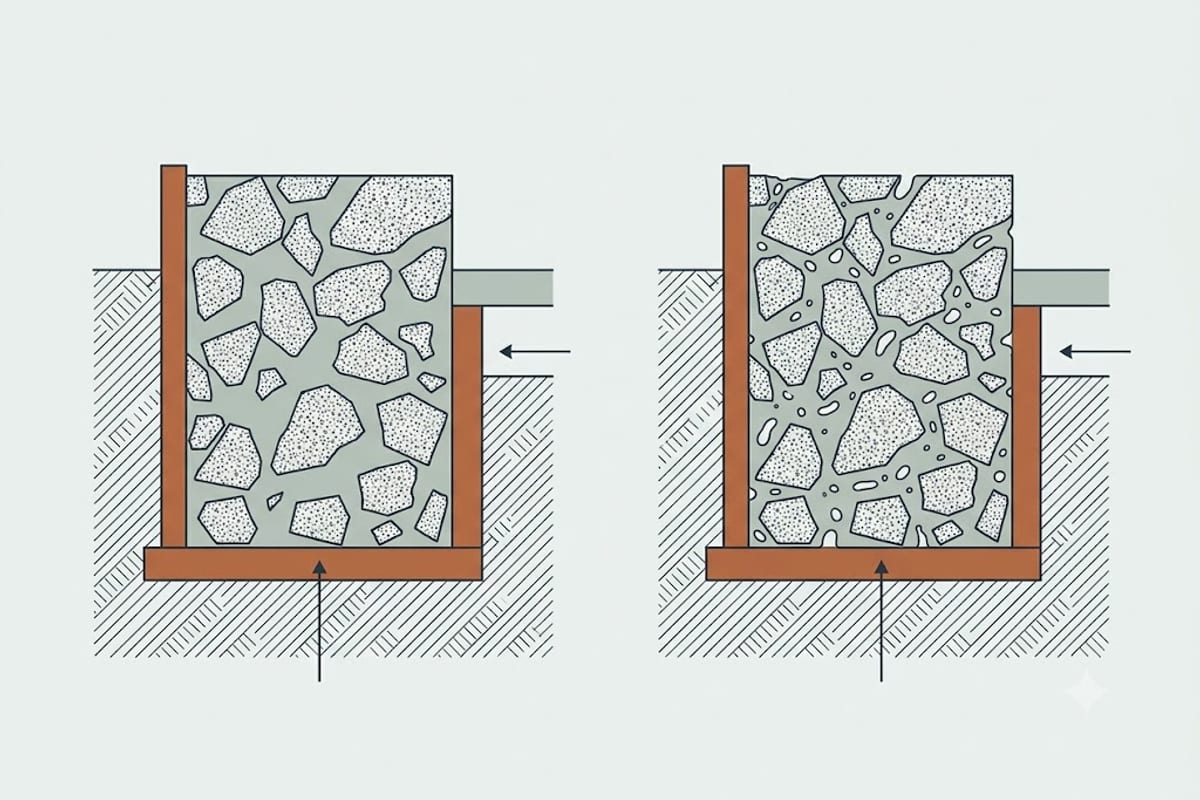
Bagged mixes are already 1:2:3, roughly
An 80 lb bag of standard concrete mix is cement, sand and aggregate pre-proportioned to about 3,000–4,000 psi. Adding cement to "strengthen" it changes a designed grading into an undesigned one, and typically makes it worse.
What bagged mix does need is the right water, and the bag says how much. It is always less than feels comfortable.
Slump is the field check
Slump measures consistency, not strength — but since water controls both, a slump much higher than specified is a reliable sign of a mix that will not reach its number. Residential slabs are typically specified at 4 to 5 inches.
If a ready-mix truck arrives and the driver offers to add water, understand what is being offered: easier placement in exchange for strength. On a driveway that is a bad trade.
Where the ratio matters least
Fence posts. A post hole is not a structural element in compression — the concrete is there to hold the post against lateral movement and to keep water off the timber. The post hole calculator sizes the volume; the mix can be almost anything cementitious.