Bags & Coverage
Bagged concrete is priced per bag and mixed on site. Ready-mix arrives wet in a truck. The decision between them is almost always volume, and the crossover is sharper than people expect.
Yields, printed on the bag
80 lb → 0.60 ft³ · 60 lb → 0.45 ft³ · 50 lb fast-setting → 0.375 ft³ · 40 lb → 0.30 ft³
A cubic yard is 27 ft³, so it takes 45 bags of 80 lb, 60 of 60 lb, or 72 of the 50 lb fast-setting mix.
The crossover is about one cubic yard
Below it, bags win on price even counting your time. Above it, ready-mix wins decisively — 45 bags is 3,600 lb of material to move, open and mix, and concrete does not wait while you do it. Most suppliers have a one-yard minimum plus a short-load fee, and that fee is smaller than the difference in bags.
Fast-setting mix is a different product
The 50 lb fast-setting bags are designed to be poured into a hole dry, with water added on top. That works for fence posts and it is what the bag is for. It does not work for anything load-bearing: dry-poured concrete cures unevenly and never reaches its rated strength.
Coverage, and the mistake in it
Bag counts are calculated from finished volume. On drilled holes the bottom flares and the walls are never exactly the nominal diameter, so a small allowance is built in. On formed work — slabs, footings — the allowance is for spillage and an uneven base.
Adding 10% twice is how people end up with six bags left over, which is a smaller mistake than running out but still a mistake.
3 articles
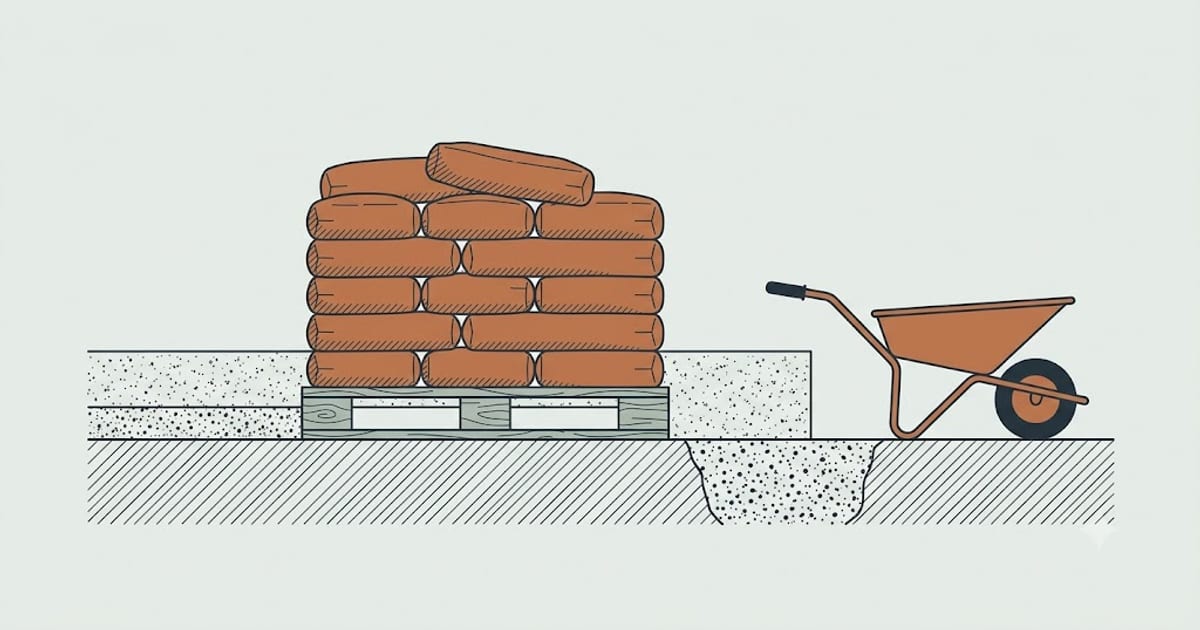 How Many Bags of Concrete in a Yard? 45 at 80 lb — and Why You Should Not
The arithmetic is one division. The useful part is what 45 bags actually means — 3,600 pounds to carry and a day of mixing — and where the crossover to ready-mix sits.
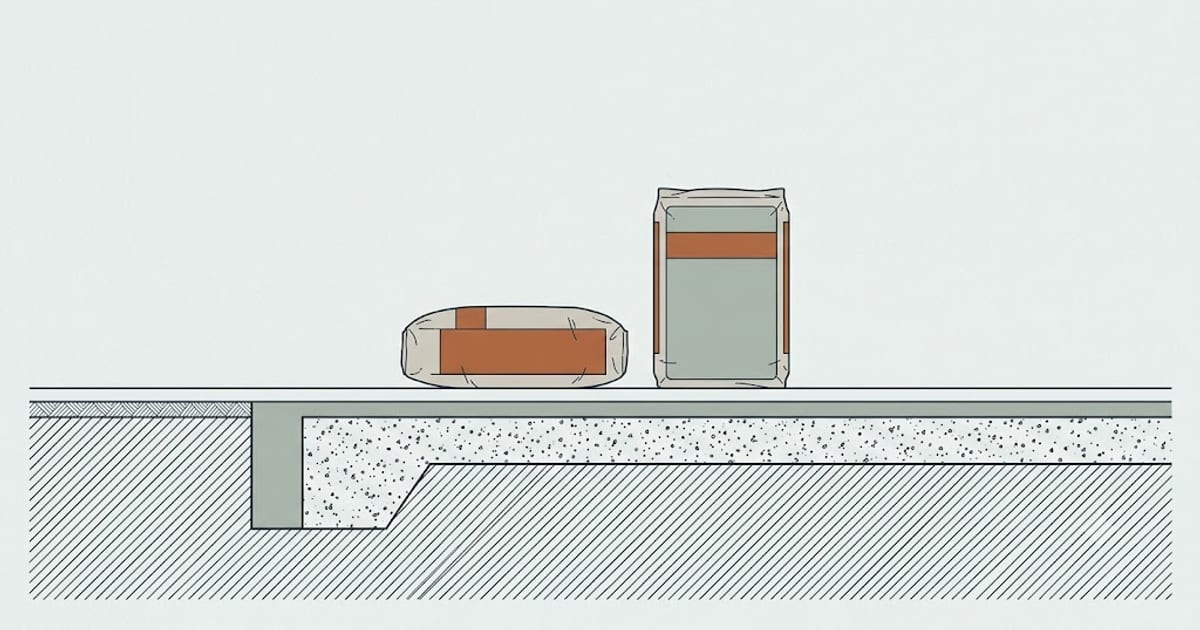 60 lb or 80 lb Concrete Bags? The Yield Difference Is Not the Deciding One
The 80 lb bag is usually cheaper per cubic foot. Whether that matters depends on how far you have to carry it and what you are mixing in.
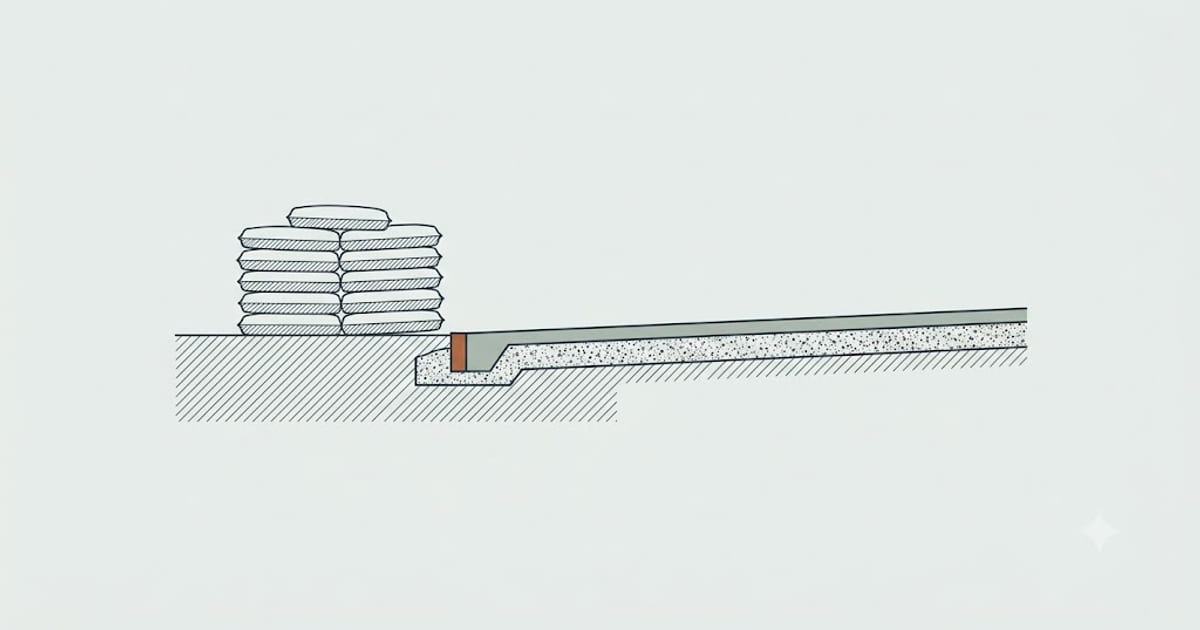 Bags of Concrete per Square Foot, by Thickness and Bag Size
One bag per square foot is a number people repeat. It happens to be roughly right for one specific combination and wrong for every other one.