Curing & Weather
Concrete does not dry. It cures — a chemical reaction between cement and water called hydration, which continues for as long as there is moisture and unreacted cement left. A slab poured decades ago is still, very slowly, gaining strength.
What matters on site is the shape of the curve, not the end of it.
The numbers that govern a schedule
- 24 to 48 hours — forms can usually come off vertical surfaces. Foot traffic is generally acceptable at about 24 to 48 hours.
- 7 days — roughly 70 percent of design strength. This is when most projects can carry normal loads.
- 28 days — the reference point. When concrete is specified as 3,000 psi, that means at 28 days.
Those figures assume moisture is kept in and the temperature stays reasonable. Break either assumption and the curve flattens.
Keeping water in is the whole job
The failure mode people cause most often is letting a fresh slab dry out. Hydration stops when the water leaves, and any strength not yet developed is not developed later — it is simply lost.
Wind and sun matter more than air temperature here. Cover the pour, mist it, or use a curing compound, and keep it that way for the first seven days. This costs almost nothing and it is the difference between the strength you specified and the strength you get.
Cold: 500 psi before it freezes
Fresh concrete that freezes before reaching roughly 500 psi suffers permanent damage — the water in it expands and disrupts the paste before it has the strength to resist. That strength is not recovered by warming up afterward.
Below about 50 °F hydration slows markedly, and near freezing it nearly stops. Cold-weather pours need blankets, heated enclosures, or an accelerator, and the 500 psi threshold is what all of it is aimed at.
Hot: the opposite problem, same cause
Above roughly 90 °F, concrete sets faster than crews can finish it and loses surface water quickly enough to craze the top. Pour early in the day, dampen the subgrade and forms beforehand, and have the covering ready before the pour, not after.
Both extremes are the same problem wearing different clothes: control the water, and control how fast it leaves.
3 articles
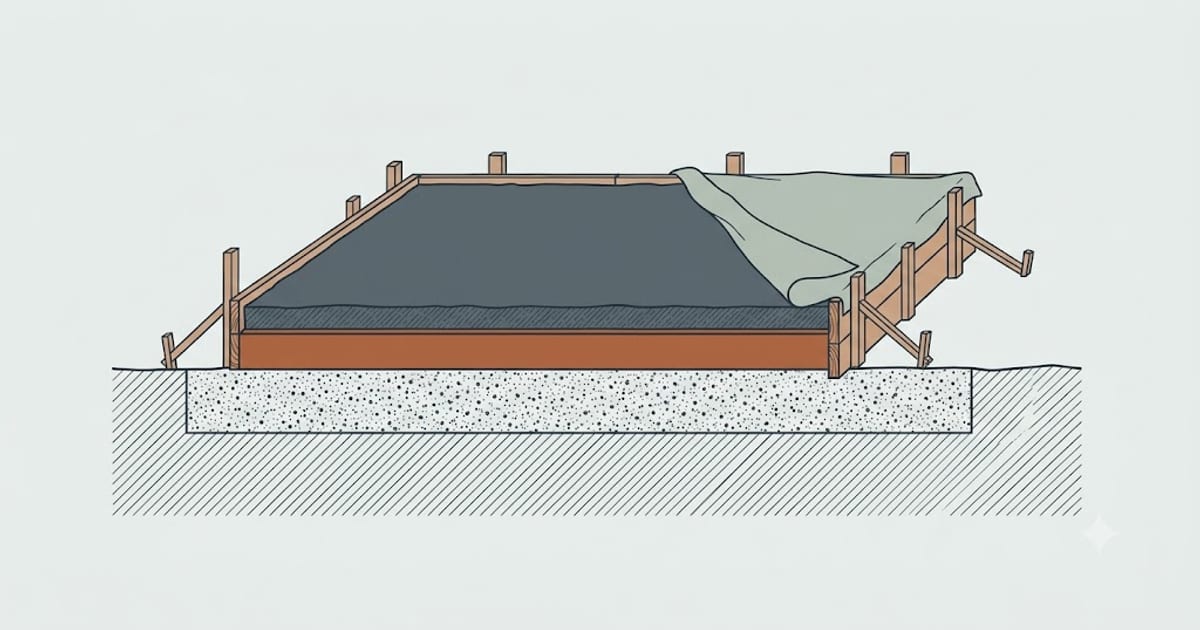 When Can You Walk on New Concrete? 24 Hours — and Drive on It in 7 Days
Concrete becomes usable long before it becomes strong. Confusing the two is how a driveway ends up with cracks nobody can explain.
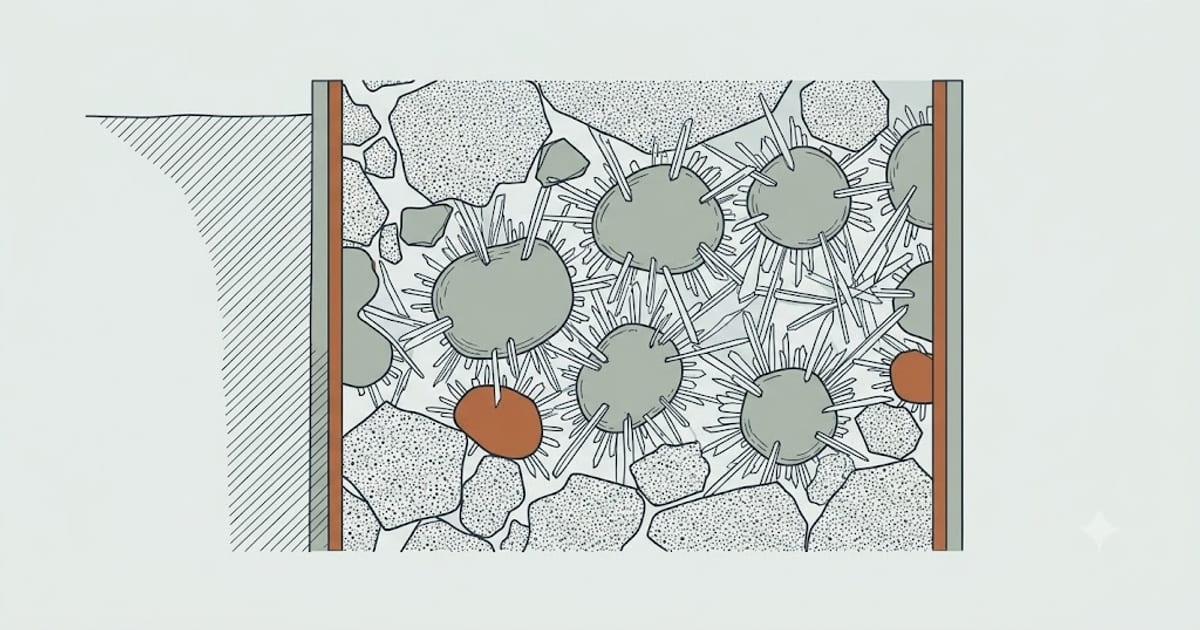 How Long Concrete Takes to Cure — and Why It Never Stops
Concrete does not dry. It reacts with water, and every day you let it dry early is strength you never get back.
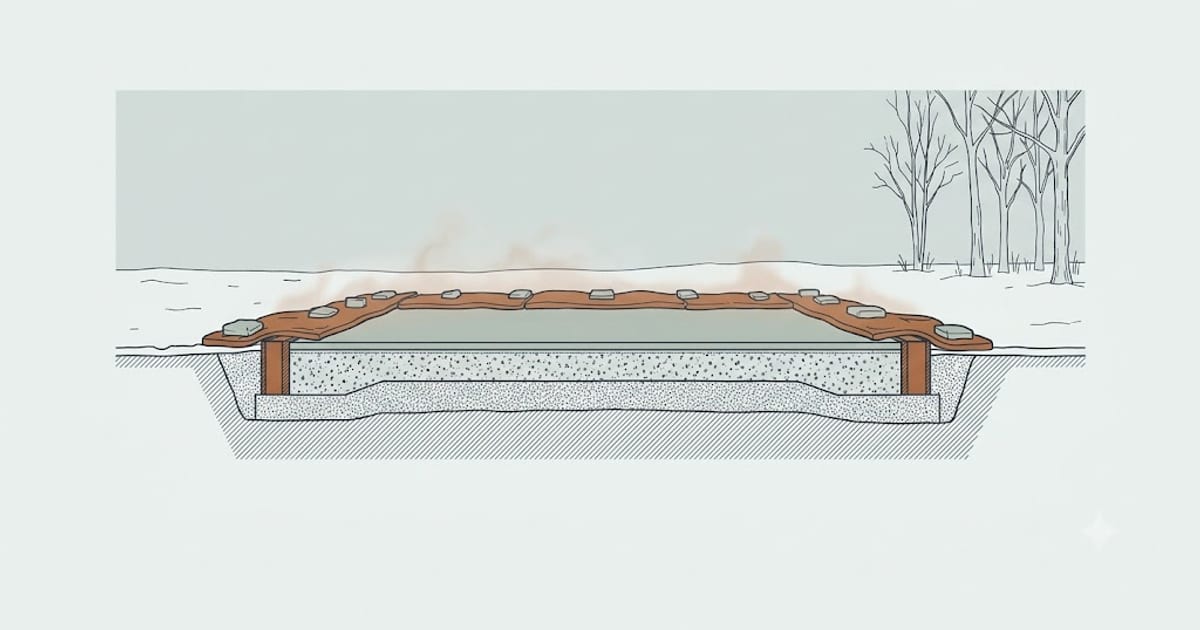 Pouring Concrete in Cold Weather: The 500 psi Line
There is one hard threshold in cold-weather concreting, and everything else is a means of getting past it before the temperature does.