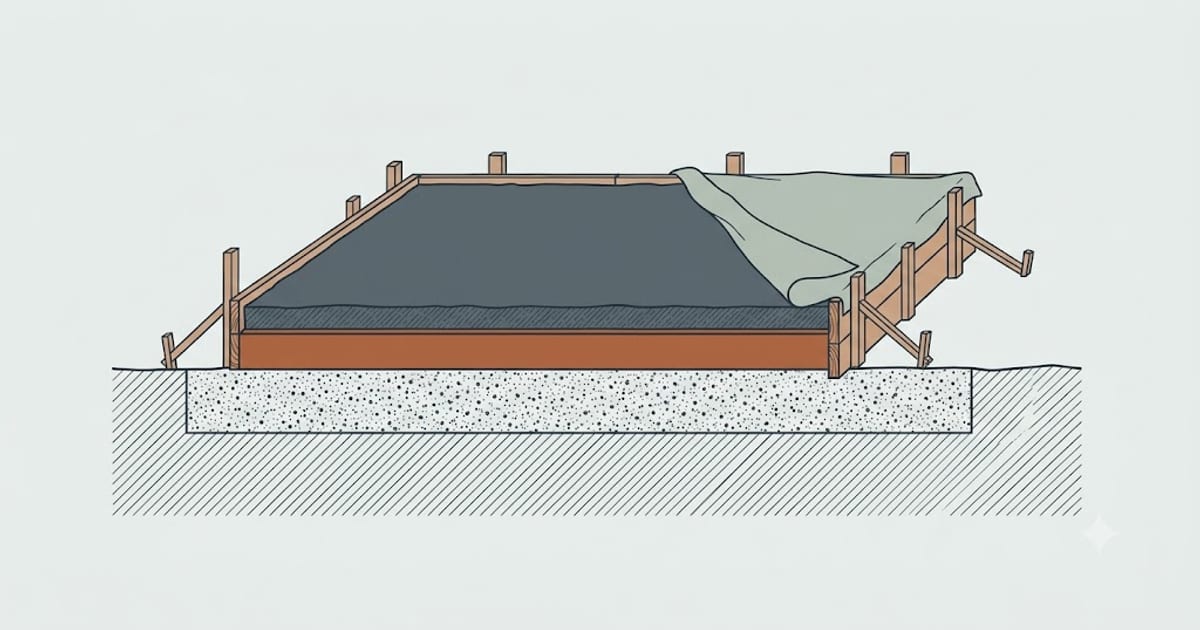
| Milestone | Time |
|---|---|
| Foot traffic | 24–48 hours |
| Forms off vertical surfaces | 24–48 hours |
| Light vehicles | 7 days |
| Heavy vehicles, full loads | 28 days |
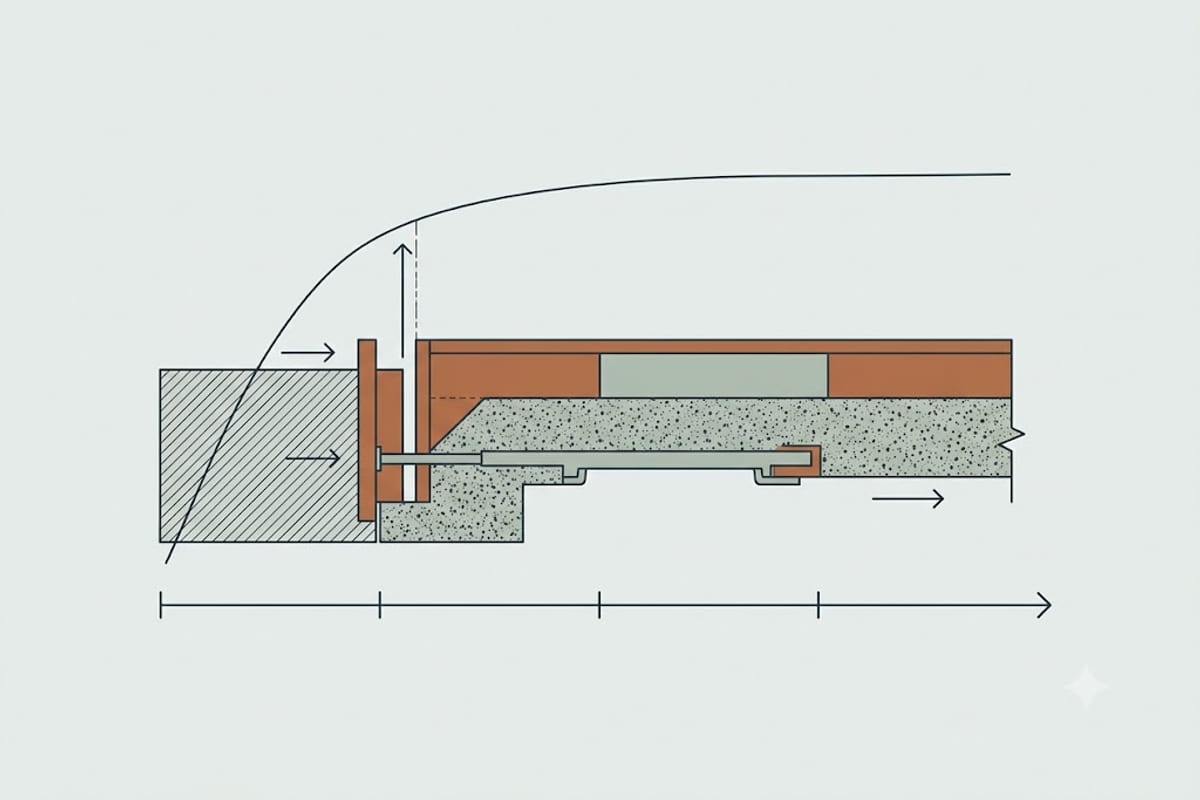
Those assume moderate temperatures — roughly 50–90 °F — and a slab that has been kept damp. Break either assumption and every figure stretches.
Walkable is not cured
At 24 hours concrete carries a person without marking. It has perhaps a quarter of its final strength.
At 7 days it has around 70%. At 28 days it reaches the strength it was specified for, and it continues gaining slowly for years afterwards. See how long concrete takes to cure for why the curve never quite ends.
The gap between "carries a footprint" and "carries a car" is the interesting part. A driveway driven on at day 3 does not fail visibly — it develops microcracking that shows up months later as cracks nobody connects to anything. The damage was done and then forgotten.
Cold stretches everything
Hydration slows markedly below about 50 °F and nearly stops near freezing. In cold weather:
- Foot traffic may need 48–72 hours.
- Vehicles need considerably longer than 7 days.
- The 28-day figure assumes standard conditions and is optimistic in a cold snap.
There is also a hard threshold rather than a delay. Fresh concrete that freezes before reaching roughly 500 psi is permanently damaged, and warming up afterwards does not recover it. That is the subject of pouring in cold weather.
Keep it wet, and that matters more than staying off it
The instinct is to protect new concrete by not touching it. The more useful protection is moisture.
Hydration is a chemical reaction that consumes water. If the surface dries out, the reaction stops there, and any strength not yet developed is not developed later — it is lost. A slab that dried out at the surface in its first days ends up with a weak, dusty top layer no matter how long you wait.
Cover it, mist it, or use a curing compound, and keep it that way for the first seven days. This costs almost nothing and it is the difference between the strength you specified and the strength you get.
Do not confuse this with the concrete needing to "dry". Concrete does not dry; it cures. Water leaving early is a loss, not progress.
Things people do too early
- Removing forms from slab edges before 24 hours, taking the edge with them.
- Sealing before the concrete has released its moisture — most sealers want 28 days.
- Parking a skip or dumpster on a week-old driveway. Point loads are worse than distributed ones.
- Power washing. The surface is still fragile for weeks.
- Scraping ice or using de-icing salt in the first winter. Salt on young concrete is one of the fastest ways to spall a new slab.
FAQ
How long before you can walk on concrete?
24 to 48 hours in moderate temperatures. Longer in cold weather.
How long before you can drive on new concrete?
Seven days for light vehicles, 28 days for heavy ones. Driving on it earlier causes microcracking that surfaces months later.
When can I remove the forms?
24 to 48 hours for vertical surfaces. Slab edges are more fragile — leave them the full 48 if you can.
Does concrete need to be kept wet?
Yes, for the first seven days. Hydration consumes water, and a surface that dries out stops gaining strength permanently.
Can I use salt on new concrete in winter?
No, not through the first winter. De-icing salt on young concrete is one of the quickest ways to spall the surface.