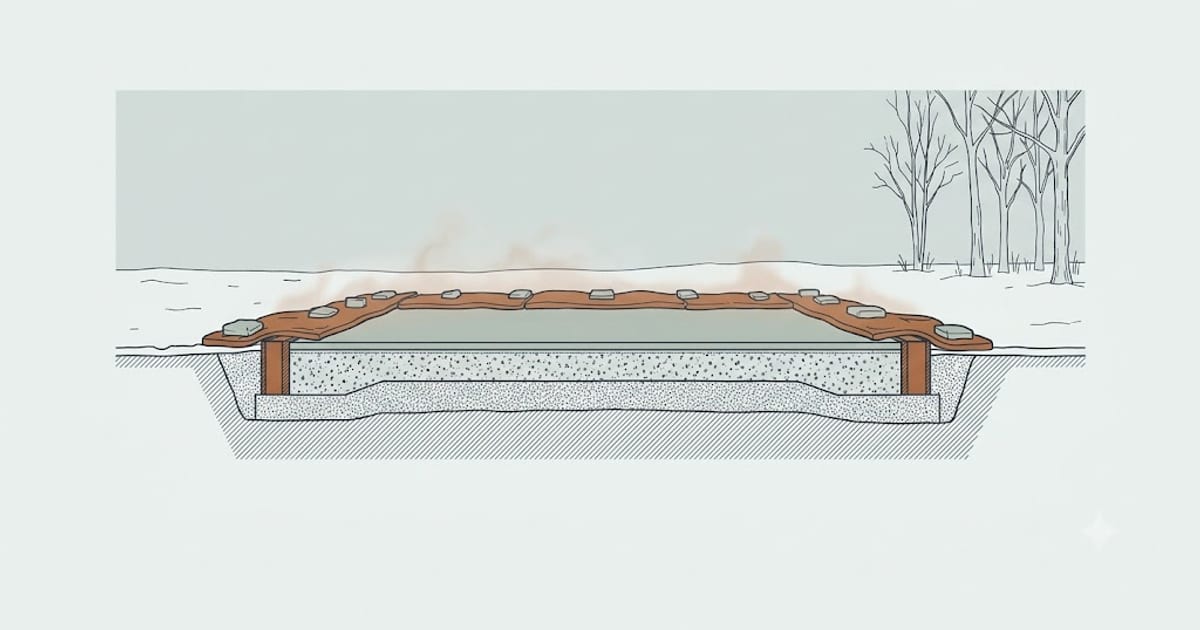
Cold-weather concreting has exactly one hard rule: concrete that freezes before it reaches roughly 500 psi is permanently damaged. The water in the mix expands as it turns to ice, disrupts the paste structure that is still forming, and the strength never comes back. There is no repair.
Everything else in cold-weather practice is a means of getting to 500 psi before that happens.
How long is that
At 20 °C, a normal mix reaches 500 psi in roughly 12 hours. At 10 °C, 24 hours or more. At 5 °C, hydration is slow enough that it may take two days. Below about 5 °C it effectively stops, and the concrete simply waits — vulnerable — until it warms up.
That is why ACI 306 defines cold-weather concreting as three consecutive days with average temperature below 5 °C, and requires protection for the whole of that vulnerable period, not just the coldest night.
What actually works
Heat the materials, not the finished slab. Ready-mix plants heat mixing water — the single most effective intervention, because it raises the temperature of the mix throughout rather than only at the surface. Ask for it.
Insulating blankets. Concrete generates its own heat as it hydrates. Blankets keep that heat in, and on a mass pour that is often enough by itself. On a thin slab there is much less heat to keep.
Heated enclosures. Effective and expensive. Direct-fired heaters inside an enclosure raise CO₂ levels enough to carbonate the fresh surface, leaving it soft and dusty — vent them or use indirect heat.
Accelerating admixtures. Calcium chloride speeds early strength gain and shortens the vulnerable window. It also promotes corrosion of embedded steel, so it is limited or prohibited in reinforced work. Non-chloride accelerators cost more and avoid that.
Type III cement. Ground finer, reacts faster, reaches 500 psi sooner. A specification change rather than a site measure.
What does not work
Antifreeze. There is no consumer product that lets concrete cure below freezing. Adding salt to the mix lowers the freezing point slightly and corrodes reinforcement badly. Do not.
Extra cement alone. A richer mix generates more heat and is a genuine help on mass pours, but on a 4-inch slab the extra heat is lost to the ground and the air almost as fast as it is made.
Pouring on frozen ground. The subgrade must be thawed. Concrete placed on frozen ground loses heat downward and, worse, the ground settles when it thaws — taking the slab with it.
Waiting for the sun. A clear cold night radiates heat away from an exposed slab faster than a cloudy one. Clear skies after a cold pour are worse, not better.
The finishing problem nobody mentions
Cold concrete bleeds for longer, because the water rises at the same rate but the set is delayed. Finishing over bleed water works it back into the surface and produces a weak, dusty layer.
The result is that cold-weather pours are finished late — sometimes hours later than the crew expects, occasionally after dark. Plan the day around it.
Air entrainment is not optional
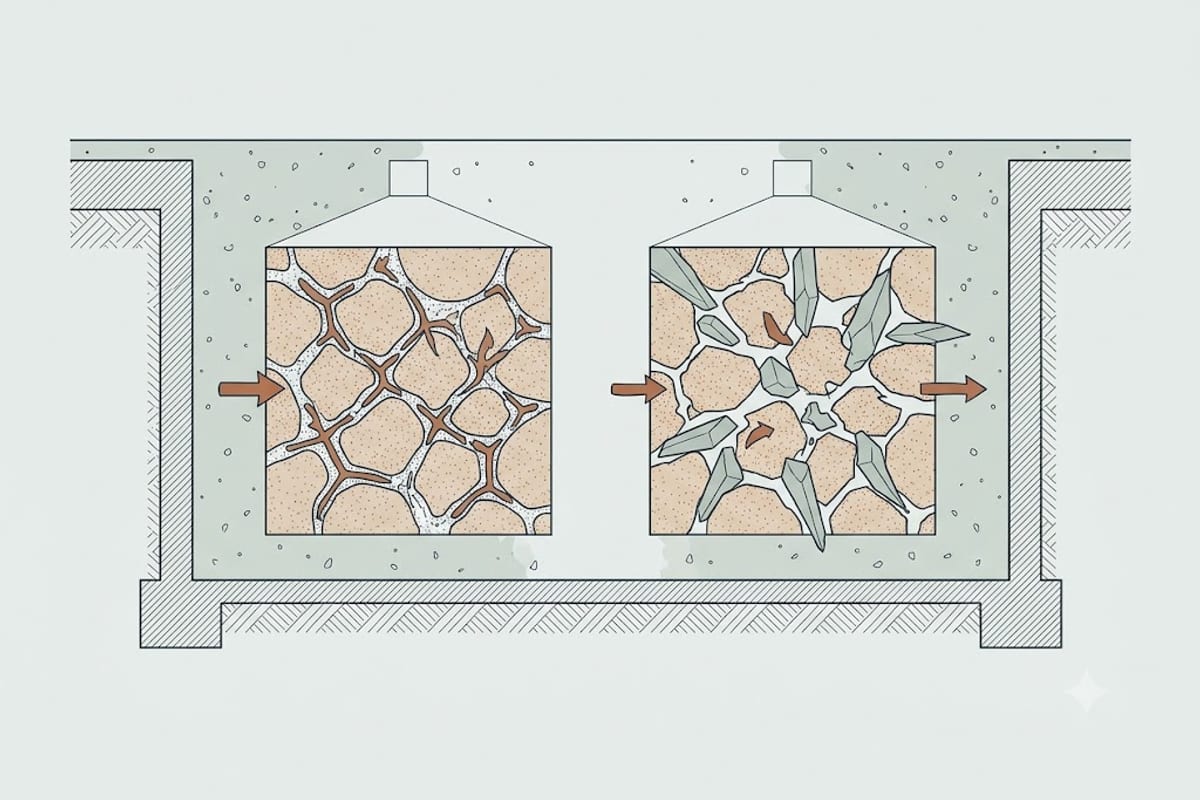
Any concrete exposed to freeze-thaw after curing needs entrained air — microscopic bubbles that give freezing water somewhere to expand into. 5 to 7% for exterior flatwork in a freezing climate.
This is separate from the cold-placement question and it matters for the whole life of the slab. A driveway without entrained air in a northern climate will scale, whatever the weather on pour day.
When to just not
If the forecast shows freezing within 24 hours and you have no way to keep the slab above about 5 °C for the first two or three days, postpone. Concrete waits well. A damaged slab does not un-damage.
Work out the volume with the slab calculator so the order is ready, and pour on the next good week.