Rebar size and weight
Rebar size and weight — one page per exact question.
Rebar is sized by a number that is also its diameter, once you know the trick: the bar number is eighths of an inch.
The table
| Bar | Diameter | Weight |
|---|---|---|
| #3 | 3/8 in (0.375) | 0.376 lb/ft |
| #4 | 1/2 in (0.500) | 0.668 lb/ft |
| #5 | 5/8 in (0.625) | 1.043 lb/ft |
| #6 | 3/4 in (0.750) | 1.502 lb/ft |
| #7 | 7/8 in (0.875) | 2.044 lb/ft |
| #8 | 1 in (1.000) | 2.670 lb/ft |
#4 at 1/2 inch is the residential workhorse — slabs, footings, small walls. #3 appears in slabs on grade where the steel is there for crack control rather than strength.
Weight climbs with the square of diameter, so a #8 bar is not twice a #4, it is four times it. That is what makes a delivery estimate go wrong when a size gets substituted.
Spacing carries as much of the answer as size
Steel area per foot of slab is what a design actually calls for, and there are two ways to get it: bigger bars further apart, or smaller bars closer together. Closer and smaller distributes crack control better; bigger and wider is faster to tie.
bars needed = (span ÷ spacing) + 1
The +1 catches people. A 20 ft width at 12 in spacing is 21 bars, not 20 — both edges get one.
Cover is not optional and not decorative
Concrete protects steel from moisture. Too little cover and the bar corrodes, expands, and spalls the slab off from the inside; too much and the steel sits outside the tension zone where it does nothing.
Rebar dumped on the sub-grade and "pulled up during the pour" ends up on the bottom, which is the same as having no steel in a slab loaded from above. Chairs cost almost nothing.
1 article
How much does 200 ft of #8 rebar weigh?
| Diameter#8 means 8/8 of an inch | 1in |
|---|---|
| Weight per foot | 2.67lb/ft |
| Weight of 200 ft | 534lb |
| Lengths to buy (20 ft)yards also stock 10 and 40 ft in the common sizes | 10sticks |
| Cross-section areathe number that appears in an engineer’s drawing | 0.79in² |
| Typical lap splice40 × diameter — check the drawing, this is a common value not a rule | 40in |
Notes
- The number is the diameter in eighths of an inch. #8 rebar is 8/8 of an inch, which is 1″. That one rule covers every size from #3 to #11 and it is the fastest way to read a drawing without a chart. It stops working at #14 and #18, which are sized by area instead.
- Weight is how rebar is priced and how it is handled. At 2.67 lb per foot, 200 ft comes to 534 lb — worth knowing before deciding whether this is a job for one person and a pickup.
- Cross-section area (0.79 in²) is the number the engineer uses. When a drawing calls for a given area of steel per foot of wall, it is this figure being added up, not the diameter or the weight.
- This page does not tell you what size to use. Bar size, spacing, cover and lap length come from the structural drawing and from local code. Slab-on-grade in a garage and a retaining wall holding back a hillside can both be "concrete with rebar in it" and share nothing else.
- Figures are the ASTM A615 standard table, not one supplier's catalogue. Any yard selling to that standard sells the same bar to the same dimensions.
Rebar size and weight
121 calculations · browse all
- How much does 20 ft of #3 rebar weigh?
- How much does 60 ft of #3 rebar weigh?
- How much does 200 ft of #3 rebar weigh?
- How much does 400 ft of #3 rebar weigh?
- How much does 1000 ft of #3 rebar weigh?
- How much does 40 ft of #4 rebar weigh?
- How much does 150 ft of #4 rebar weigh?
- How much does 300 ft of #4 rebar weigh?
- How much does 750 ft of #4 rebar weigh?
- How much does 20 ft of #5 rebar weigh?
- How much does 100 ft of #5 rebar weigh?
- How much does 200 ft of #5 rebar weigh?
- How much does 500 ft of #5 rebar weigh?
- How much does 1000 ft of #5 rebar weigh?
- How much does 60 ft of #6 rebar weigh?
- How much does 150 ft of #6 rebar weigh?
- How much does 400 ft of #6 rebar weigh?
- How much does 750 ft of #6 rebar weigh?
- How much does 40 ft of #7 rebar weigh?
- How much does 100 ft of #7 rebar weigh?
- How much does 300 ft of #7 rebar weigh?
- How much does 500 ft of #7 rebar weigh?
- How much does 20 ft of #8 rebar weigh?
- How much does 60 ft of #8 rebar weigh?
- How much does 200 ft of #8 rebar weigh?
- How much does 500 ft of #8 rebar weigh?
- How much does 1000 ft of #8 rebar weigh?
- How much does 60 ft of #9 rebar weigh?
- How much does 150 ft of #9 rebar weigh?
- How much does 400 ft of #9 rebar weigh?
- How much does 750 ft of #9 rebar weigh?
- How much does 40 ft of #10 rebar weigh?
- How much does 100 ft of #10 rebar weigh?
- How much does 300 ft of #10 rebar weigh?
- How much does 500 ft of #10 rebar weigh?
- How much does 20 ft of #11 rebar weigh?
- How much does 60 ft of #11 rebar weigh?
- How much does 200 ft of #11 rebar weigh?
- How much does 400 ft of #11 rebar weigh?
- How much does 1000 ft of #11 rebar weigh?
- How much does 40 ft of #14 rebar weigh?
- How much does 150 ft of #14 rebar weigh?
- How much does 300 ft of #14 rebar weigh?
- How much does 750 ft of #14 rebar weigh?
- How much does 20 ft of #18 rebar weigh?
- How much does 100 ft of #18 rebar weigh?
- How much does 200 ft of #18 rebar weigh?
- How much does 500 ft of #18 rebar weigh?
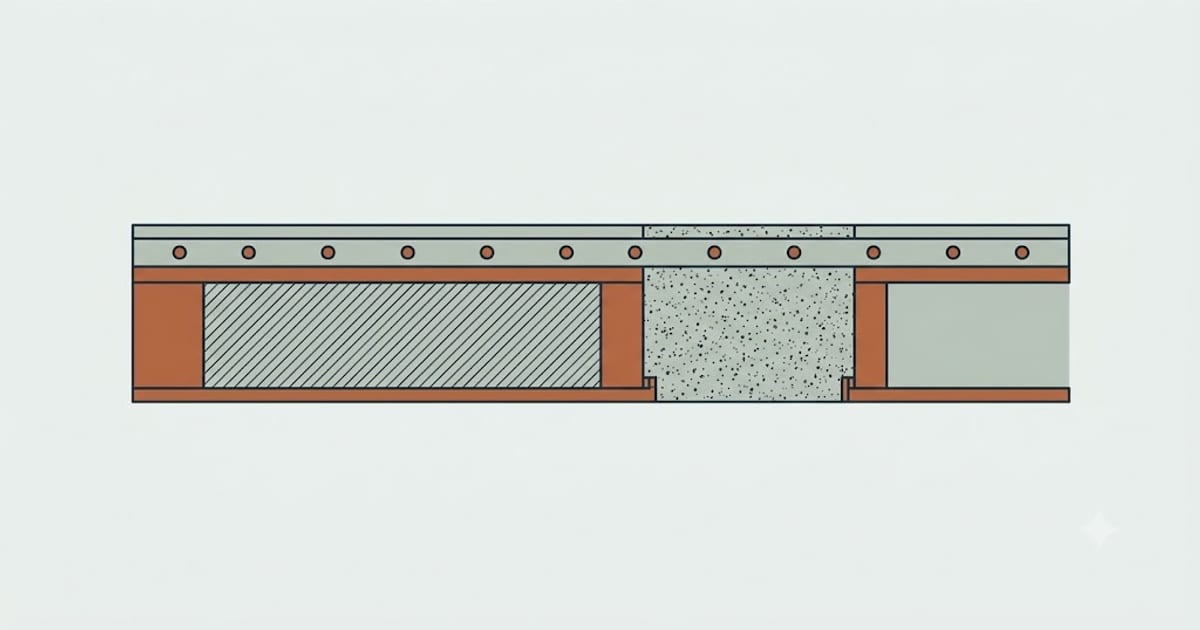 Rebar in a Slab — Spacing, Cover, and Why Position Matters More
Rebar laid on the ground and left there does nothing. It has to be held up into the concrete, and that is the step that gets skipped.